Showing posts with label Evan Brandt. Show all posts

Thursday, December 6, 2012

Free holiday story hour for kids will be held Friday at The Mercury

Bring your kids to The Mercury's holiday story hour
Friday, Dec. 7, from 6:30 to 7:30 in the media lab
The Mercury is hosting a free story time for kids this Friday as part of the holiday events happening throughout the month of December in downtown Pottstown. 

The Mercury's holiday story hour will be from 6:30 to 7:30 p.m. Friday in the Community Media Lab, located adjacent to our main entrance at 24 N. Hanover St. in Pottstown.

Special guests readers Mercury Editor Nancy March, who writes The Editor's Desk blog; Reporter Evan Brandt, who pens the Digital Notebook blog; TownSquare blogger Mandy March from So Much To Do, So Little Time; and Community Engagement Editor Diane Hoffman, author of the Lessons in Triathlon blog, who will read specially selected holiday-themed books to children and their families during the hour. 


The book selections include "The Polar Express," by Chris Van Allsburg, which will be read by the beguiling Mandy March. 

Fresh, home-made cookies and hot chocolate will be available for all children in attendance. (I'm hoping there will be some free cookies and hot chocolate for random adult book bloggers who also plan to visit the story hour.) There will also be a holiday coloring activity for children. 

If you can't make it to story hour, be sure to stop back and visit The Mercury's Community Media Lab during its regular hours. The lab is free and open to the public Monday to Thursday from 11 a.m. to 2 p.m. and is located inside The Mercury at 24 N. Hanover St. With three computers, a microfilm machine in which to look up archives of The Mercury that go back to 1933 and free WIFI for those with their own lab top, the lab is a great place to sit and relax. There's also a free lending library that includes all kinds of books, from "Into the Wild" by Jon Krakauer to a vast collection of Anita Shreve novels, available for borrowing. Coffee and water are also available for $1. The Media Lab is also available to community groups looking for a free space to use. 


For more information about the holiday story hour or The Mercury's Community Media Lab, call Diane Hoffman at 610-323-3000, ext. 156, or email dhoffman@pottsmerc.com

Thursday, July 26, 2012

Psssst ... There's a free lending library at The Mercury's Community Media Lab

Today I'm writing from The Mercury's brand new Community Media Lab, where the newpaper offers the public free WiFi, the use of three computers, a microfilm machine to look up past editions of the paper, and space to hold a meeting or small gathering.

The lab is open from 11 a.m. to 2 p.m. Monday through Thursday immediately adjacent to the offices of The Mercury at 24 N. Hanover St., Pottstown (located at the intersection of King and Hanover streets). The lab celebrated its grand opening on July 20.  It is usually staffed by Mercury Community Engagement Editor Diane Hoffman, but sometimes she gets to have a day off and people like me fill in.

Our lending "library" at the lab.
At the lab we also have a small lending library of books on loan from various Mercury staffers. Our "library" consists of just one 3-tiered bookshelf, but on it you'll find a fair sampling of books in lots of different genres.

There's an 8-book collection of Anita Shreve novels (great for the beach!); various mystery/suspense/thriller novels by writers including Mary Higgins Clartk, Tom Clancy, Jack Higgins, and Thomas Harris; non-fiction writing including Jon Krakauer's amazing book "Into the Wild" and Stephen King's "On Writing"; and some of my personal picks, which include "The Book of Ruth" by Jane Hamilton (dark and deep) "The Secret Life of Bees" by Sue Monk Kidd (mysterious and engrossing) and "Turtle Moon" by Alice Hoffman (magical and enchanting).

We had a total of 5 visitors today!
We are also in the lending library some how-to books - "The Garden Primer,"  and "Train Your Dog in One Hour" and even some nonfiction offerings from local (Pottstown!) writers: "The Chiropractic Way to Health" by Leo McCormick, Darryl Hajduczek and Roger Walker: as well as the extremely well done "Save Our Land, Save Our Towns" by former Mercury Editor Thomas Hylton. We also have a copy of the stellar documentary that accompany's Tom's book.

There are also several copies of Mercury Reporter Evan Brandt's "The Hidden River" series, which have been in demand since he wrote the newspaper series on the Schuylkill River way back in 2001. That's how good it is!

Some Mercury staffers including me and Mercury Editor Nancy March plan to note some of our book recommendations (just like those staff picks you see at a bookstore) and rotate them each months. So far, we still need to make the staff pick signs, but Nancy has put her recommendations of Frank McCourt's "Teacher Man" and Philly writer Mark Bowden's "Black Hawk Down" atop the shelf. Mine are those mentioned above.

We're also open to having "guest picks" - Do you have any good books you'd care to recommend? Please comment below!

A view of the lab at the end of open hours today.

Stop by check out the community media lab and our lending library. Search the 'Net, sit and read in our cushy new microfiber loveseat from Pottstown's own Lastick Furniture or take a book home for free (we just ask that you sign it out ... and promise to bring it back).

It's 100 degrees out today, but it's a cool 72.1 here in the lab. It's a nice place to stop for a cup of $1 coffee (we have a Keurig), hold a small meeting, work on our new computers or peruse some microfilm copies of The Mercury going back to 1933.

Come see us!

Thursday, May 17, 2012

Pottstown library used book sale set for Friday and Saturday

Need some new books for cheap? I recommend a visit to the used book sale that will be held at the Pottstown Regional Public Library tomorrow and Saturday (in the lower level at the back of the children's section).
 
The Friends of the Library's semi-annual book sale will be held from 10 a.m. until 5 p.m. Friday and  from from 9 a.m. to 3 p.m. Saturday. Most books are $1 or $2, as I recall. And there's a great selection of mass market paperbacks, hardback thrillers, trade paperbacks, cookbooks, classics, history books, audio books, movies ... pretty much all you could be looking for in the realm of reading fodder.

ME AND EVAN AT LAST YEAR'S KEYSTONE PRESS AWARDS
Check out this related post by PottsTownSquare blogger/Mercury reporter of all things Pottstown Evan Brandt. He claims that we snuck away from work (!!) to go book shopping at the library sale last year ... and he's right.

The other day Evan and I talked about all the books we bought that day and somehow neither of us has had time to read any of them yet (I bought "Liar's Club" by Mary Karr - at Evan's suggestion - and books of stories by Ann Beattie and Anna Quindlen and maybe some more... Evan bought the classic Moby Dick and probably some giant old history books.)

I might just see you there. My book addiction continues ...

Monday, April 9, 2012

American Wasteland author Jonathan Bloom to speak at The Hill School Thursday

JONATHAN BLOOM
Jonathan Bloom, author of "American Wasteland: How America Throws Away Nearly Half of Its Food (and What We Can Do About It)" and the popular Wasted Food blog, is scheduled to speak at The Hill School in Pottstown on Thursday on the topic of Wasted Food.

Bloom’s address will be held in The Hill School’s Center For The Arts Theatre at 7:30 p.m. It is free of charge and open to the general public. 

To learn more, here is Evan Brandt's article previewing that event, from today's Mercury. Visit Brandt's blog, Digital Notebook, here, for more on the topic of food waste and Bloom's Hill School visit.

Click here to view Bloom's "American Wasteland" website for more information about his book.

Also, you can help hungry people right here in the Pottstown area: As part of this event, The Hill School has been designated a drop-off location for The Mercury's "Fill the Media Lab Food Drive" initiative to help collect items for area food shelters. Attendees of Bloom's appearance at The Hill School are encouraged to bring canned/boxed goods, laundry detergent, and other non-perishable items to support these efforts. 

Monday, December 13, 2010

Guest blogger Evan Brandt expounds about the epic life of Cornelius Vanderbilt


When I saw on GoodReads.com, the online book club of sorts, that Mercury Reporter Evan Brandt had posted his thoughts about "The First Tycoon: The Epic Life of Cornelius Vanderbilt" by T.J. Stiles (Knopf. 719 pp. $37.50), two words came to mind: GUEST BLOG!

So here are Evan's thoughts on the book (by the way, that's Evan making sure The Mercury building doesn't fall over at left):

I have to say Vanderbilt's life, because of its longevity, and his position at the center of the changes the nation was going through at the time, is an excellent window into three distinct eras.

The fact that we have seen Wall Street throw the nation into several financial convulsions in the past, particularly when it was trying some new innovation, gives some comfort about the current circumstances.

As for the book itself, it was well-written, not a lot of preaching, and displays a true mastery of business and financial history, a much neglected sub-speciality.
The fact appears that Vanderbilt was successful in later years as much because of his careful consideration and slow-growth, focus on the infrastructure and stability of his railroads as because of the boldness of his early years as a steamboat warrior, is endlessly fascinating; a lesson ignored by most of his contemporaries and many of ours.

I am poised next to read about J.P. Morgan, whose era picks up roughly where Vanderbilt's ends, but am taking a quick break to read a short novel.

My reading about this aspect of history illustrates that the more things change on Wall Street, the more they stay the same and perhaps the era of regulation and moderation was the anomaly, and it's natural state is one of creating extreme wealth and extreme poverty with no room in the middle.

Sad but sobering. And the sheeple continue to vote for those Wall Street anoints less because they don't see that it is not to their advantage, but because they believe the lie that someday, it MIGHT be, when THEY'RE rich.

Monday, March 29, 2010

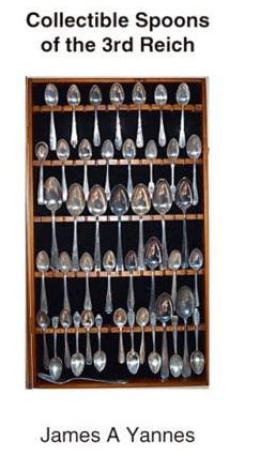
'Collectible Spoons of the Third Reich,' and other strange-but-true book titles

Our friends from across the pond at Reuters have released their annual list of book titles that take the cake. The Mercury's ever plugged in Evan Brandt found these gems on the Web and passed them along. Some are funny, some just odd...

Crocheting beats the Reich for odd title prize

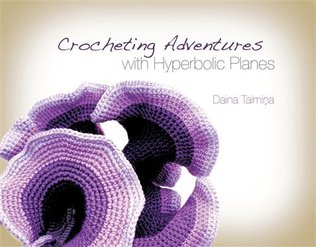
LONDON (Reuters) - Defying grim predictions that the economic downturn would clobber specialist books, the annual contest for oddest title has had a bumper year, with the 2009 winner being named on Friday as "Crocheting Adventures with Hyperbolic Planes."

The book won 42 percent of the vote run by TheBookseller.com to emerge a comfortable winner.
The top six were as follows:
1. Crocheting Adventures with Hyperbolic Planes
2. What Kind of Bean is this Chihuahua?
3. Collectible Spoons of the Third Reich
4. Afterthoughts of a Worm Hunter
5. Governing Lethal Behavior in Autonomous Robots
6. The Changing World of Inflammatory Bowel Disease

Horace Bent, The Bookseller magazine's diarist, said "Crocheting" was always the front runner.

"It defended its poll-topping position despite strong support for the spoon-carrying Third Reich, once again attempting to muscle in on someone else's territory."

Bent added: "I confess that when the credit crunch began to bite British publishing, I feared for the future of this most prestigious of literary awards.

"Surely oddly titled books would suffer in a climate that was prompting publishers to focus on more bankable works -- like frankly lamentable biographies of Z-list "celebrities' and those depressing white books with doleful children on the cover."

"I believe Crocheting Adventures with Hyperbolic Planes is a worthy champion to stand alongside the likes of 'Greek Rural Postmen and Their Cancellation Numbers' and 'Living with Crazy Buttocks' as winners of this distinguished award."

Philip Stone, The Bookseller's charts editor, said the magazine had received more than 4,500 votes, which had been a reflection of the oddest and therefore strongest shortlist in the 32-year history of the prize.

"I think what won it for Crocheting Adventures with Hyperbolic Planes is that, very simply, the title is completely bonkers," he added.

"On the one hand you have the typically feminine, gentle and woolly world of needlework and on the other, the exciting but incredibly un-woolly world of hyperbolic geometry and negative curvature.

"In Crocheting ... the two worlds collide in a captivating and quite breathtaking way."

(Reporting by Stephen Addison; Editing by Paul Casciato)

Monday, July 28, 2008

Simple steps to a greener home

Here are some environmentally-friendly tips any household can take advantage of. They are excerpted from “The Green Book” by Elizabeth Rogers and Thomas M. Kostigan. Three Rivers Press, 2007 (printed on 100 percent recycled paper):

Take a shorter shower. Every two minutes you save can conserve more than 10 gallons of water.
Set your thermostat a degree higher for air-conditioning and a degree lower for heating. You could save $100 per year on your utility bill. Keep adjusting and you’ll save even more.
Compost. Keep your kitchen scraps from fruits, vegetables and coffee grounds in a composting container. Try adding them to your garden or starting a compost site in your yard. You’ll grow a better garden, create deeper topsoil, recycle nutrients and save landfill space.
Don’t pre-rinse dishes. Run full loads in your dishwasher and save energy, and don’t pre-rinse dishes before putting them in. Do both and you’ll save up to 20 gallons of water per dish load, or 7,300 gallons over a year — that’s the same amount of water the average person drinks in a lifetime.
Clean the microwave. Keeping your microwave clean will maximize its energy. Microwaves are up to 4.8 times more energy efficient than traditional electric ovens. If it costs 10 cents to cook an item in the microwave, it would cost 48 cents to cook the same item in a standard oven.
Use glass containers. Instead of using plastic, store your food in glass or porcelain containers. Fewer chemicals will likely leach from the container into the food.
Water filters. Try installing water filters on your home faucet instead of buying bottled water. You can buy a walter filter for as little as $29 - about the same cost of a month of bottled water.
Rid yourself of junk mail. The average U.S. household received 1.5 trees’ worth of junk mail each year. To reduce the amount of junk mail you receive, visit www.dmaconsumers.org/cgi/offmailing list
Light bulbs. Dust your light bulbs and change them to compact flourescent when they burn out. You’ll increase energy efficiency and light output.
Choose matches over lighters. Over 1.5 billion plastic lighters end up in landfills yearly. Cardboard matches, made from recycled paper, are a better choice than wood matches, which are made from trees.
Filters. Instead of having to replace your disposable air filter several times a year, consider buying a permanent one that can be washed and reused indefinitely.
Dry cleaning. Request no plastic bags, and return you paper hangers to the dry cleaners for recycling.
Get rid of lint. Clean your dryer lint screen, and don’t overload the dryer. You’ll save up to 5 percent on your electricity bill. Better yet: Use a clothesline when possible.
Wrap your water heater in an insulating blanket to store heat. Set the thermostat no higher than 120 degrees to conserve energy.
Wash your car in a commercial car wash. It is better for the environment than doing it yourself. Car washes use less water per wash — up to 100 gallons less — and often recycle and reuse rinse water.
Hoses. Fit your garden hose with an automatic shut-off nozzle. You’ll save up to 6.5 gallons per minute.
Lawn care. Cut your gras so it’s two inches high, and leave the clippings on the lawn. You’ll spend less time mowing and raking, and you won’t have to water your lawn as much.
Download music instead of buying CDs. The average price of a CD is about $15, while a downloaded album is about $10. Each month, more than 45 tons of CDs end up in landfills.
Soda. Buy from the fountain in a paper cup rather than from a can or plastic bottle. More paper (48 percent) is recycled than are cans (43.9 percent) or plastic soda bottles (25 percent).
Go high-speed. Faster Internet access saves time, and ultimately money and energy. Based on a full day’s use, you could save more htan $30 per year in energy costs by increasing your Internet efficiency and turning off your computer when it’s not in use.
Don’t take an ATM receipt. ATM receipts are one of the top sources of litter on the planet.
Direct deposit your paycheck. You will get your money faster and will reduce the time and fuel you used to get to the bank.
Pay bills online and sign up for paperless bank statements. Save postage and paper.
RECYCLE. We could decrease the amount of waste sent to landfills by 75 percent if everyone in America simply separated the paper, glass, and aluminum products from the trash and put them in the recycling bin. Currently, it takes an area the size of Pennsylvania to dump all of our waste each year.

To learn more about ways to save the environment, visit award-winning Senior Mercury reporter Evan Brandt's blog The Thin Green Line.

To purchase "green gifts" including the book mentioned in this blog, visit The Green Perspective